
Love Me. Fuck You. – Notes From a Critique
The day of the critique, I ask some friends and family if they want to come. I ask in a way to make sure they say no. I want them there, but I'm still scared to share this part of me. An hour before the start of the critique, I read the email telling me I need to give a two-minute talk about my work. I knew this. I've done this before. It still threw me.
I'd just given a version of this presentation at the last Coffee and Conversation at OMA, and part of it was directly about this piece, so I spent the hour reworking that section. I felt okay about it. On the way there, I was running through possible questions in my head, fantasizing about selling work and becoming famous—the usual.
Time for wine and cheese.
When I got there, I saw people I knew, friends who have been supporting me since I joined this community, people who love my work and have told me so. I'm grateful for that. For the kind words and the hugs. It feels really good, and I don't take it for granted. Part of me wanted to stay in that corner all night. I tried to be the person who talks to strangers instead. I kind of succeeded. Mostly, I awkwardly take up space.
Second glass of wine and it's time for the critique to start. I was second to last. I tried to pay attention to the other artists and their feedback, and there was genuinely good work in the room. But I couldn't stop comparing myself. Measuring my work against the feedback each person was getting. Trying to figure out where I'd land.
Sipping my wine, hiding in my artist costume, I caught myself judging how the other artists were responding. For the most part, I thought they were being too defensive, that instead of engaging with the feedback, they were trying to protect themselves, to fight back against what was being said. I watched it happen over and over and told myself I wouldn't do that. I'd stay open. I'd listen.
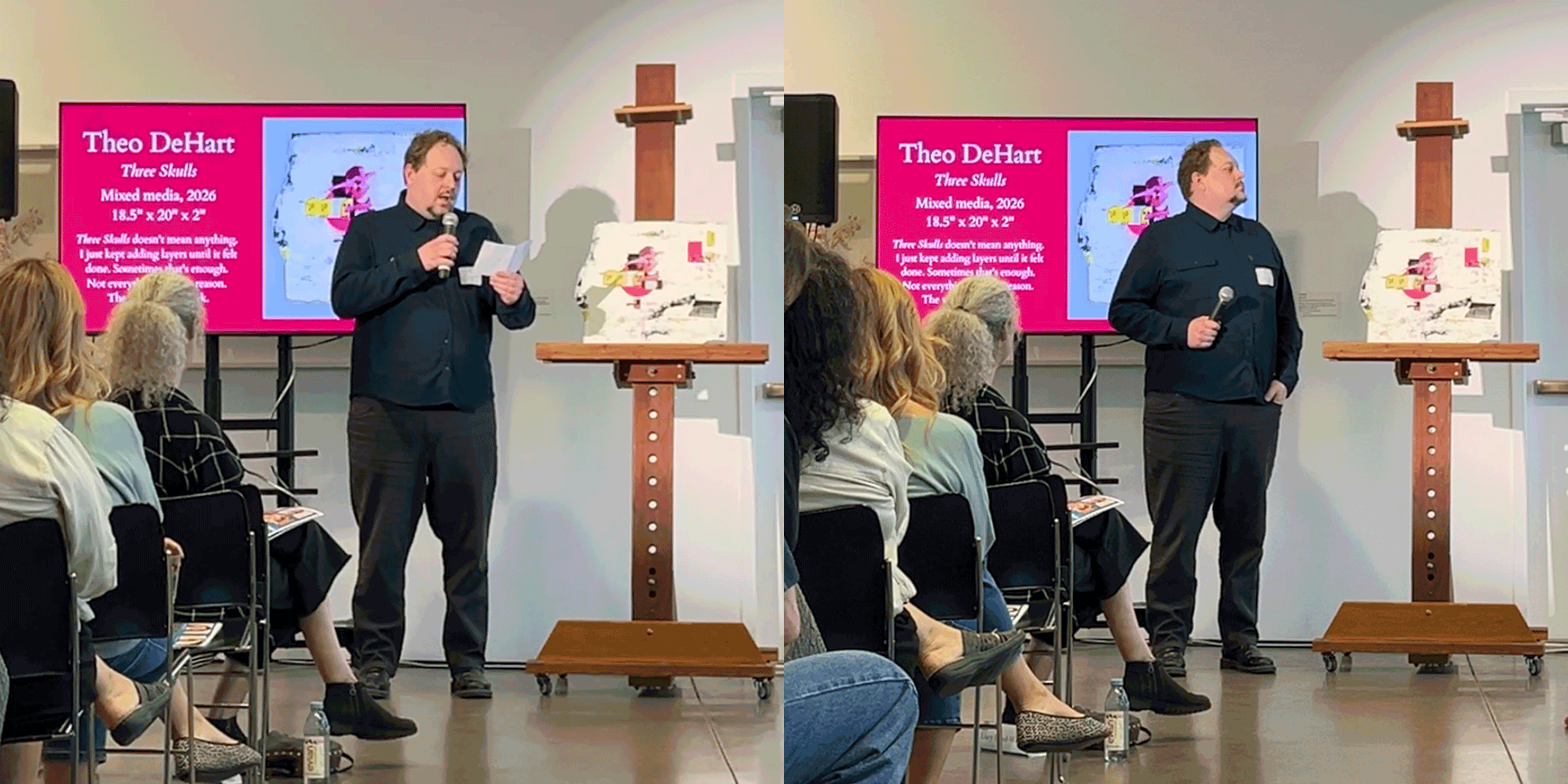
Then it's my turn.
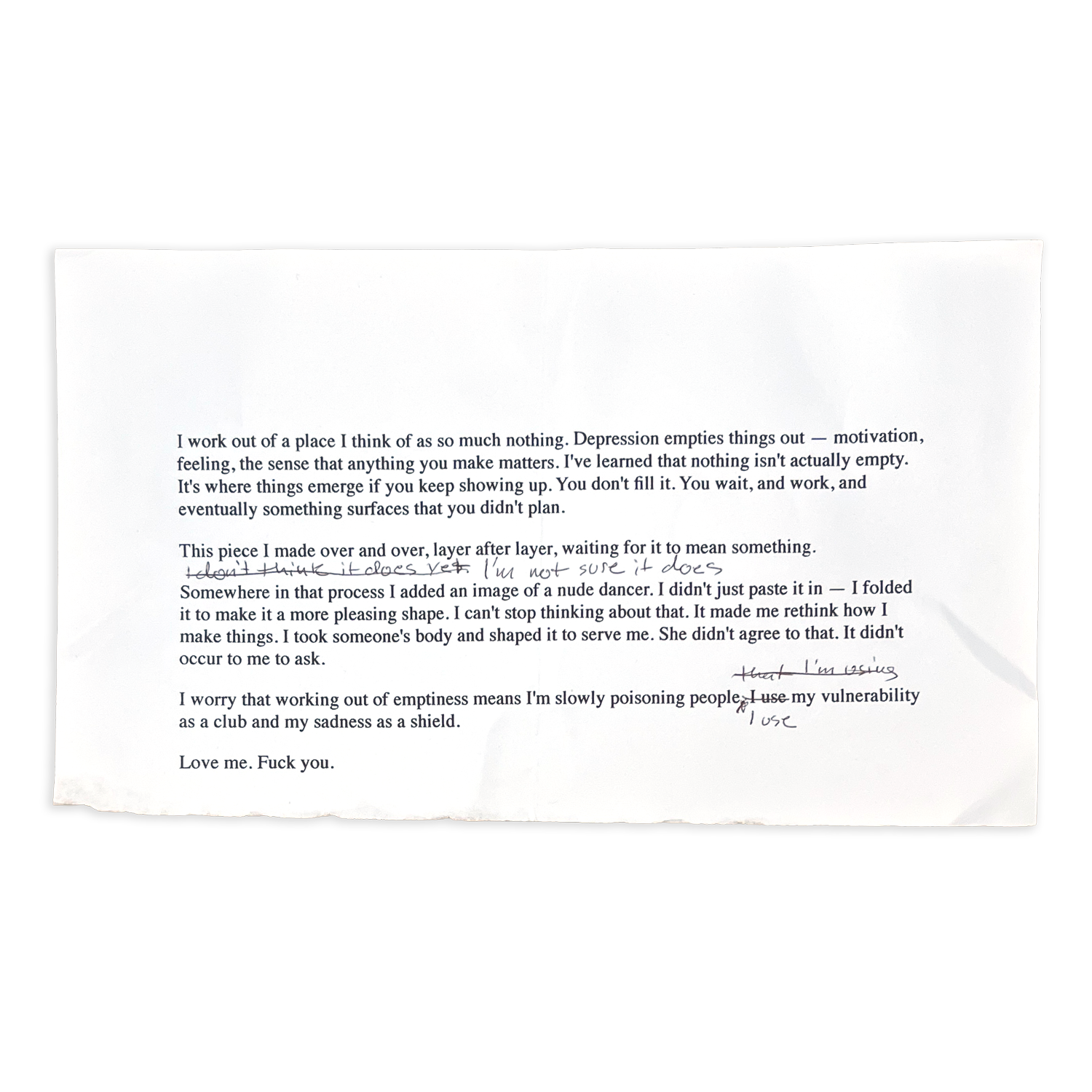
I stand up. I carry my piece to the front of the room, and I read my prepared statement. It ends with Love me. Fuck you. I wanted it to land hard. I wanted to look up, look the jurors in the face, and mean it. I couldn't do it. I looked back down at the paper.
I fail.
The critique starts, and all three jurors are incredibly kind. The feedback is generous and specific, and I fail again, I do exactly what I'd been judging everyone else for doing all night. I get defensive. I try to protect myself. I try to fight back against what's being said instead of just letting it in.
Hiding in my artist costume, sipping my wine, quietly judging everyone else for being too fragile to hear the truth. And then the truth arrives for me, and I fold.
Here's what the jurors said:
Patric Stillman said that before he heard me speak, he saw the work as fragmented and searching, raw, unfiltered mark-making with graffiti, abstraction, and figuration all layered together. After hearing the statement, he said he started to understand why. He said he wanted more cohesive language. That he could tell the pieces on screen were by the same artist, but wasn't sure what he was supposed to take from them as a collection. He asked me to think about control versus spontaneity, and about who my ideal viewer is and what I want to communicate to them. He said I was onto something layered, interesting, and fresh.
I heard this won't sell.
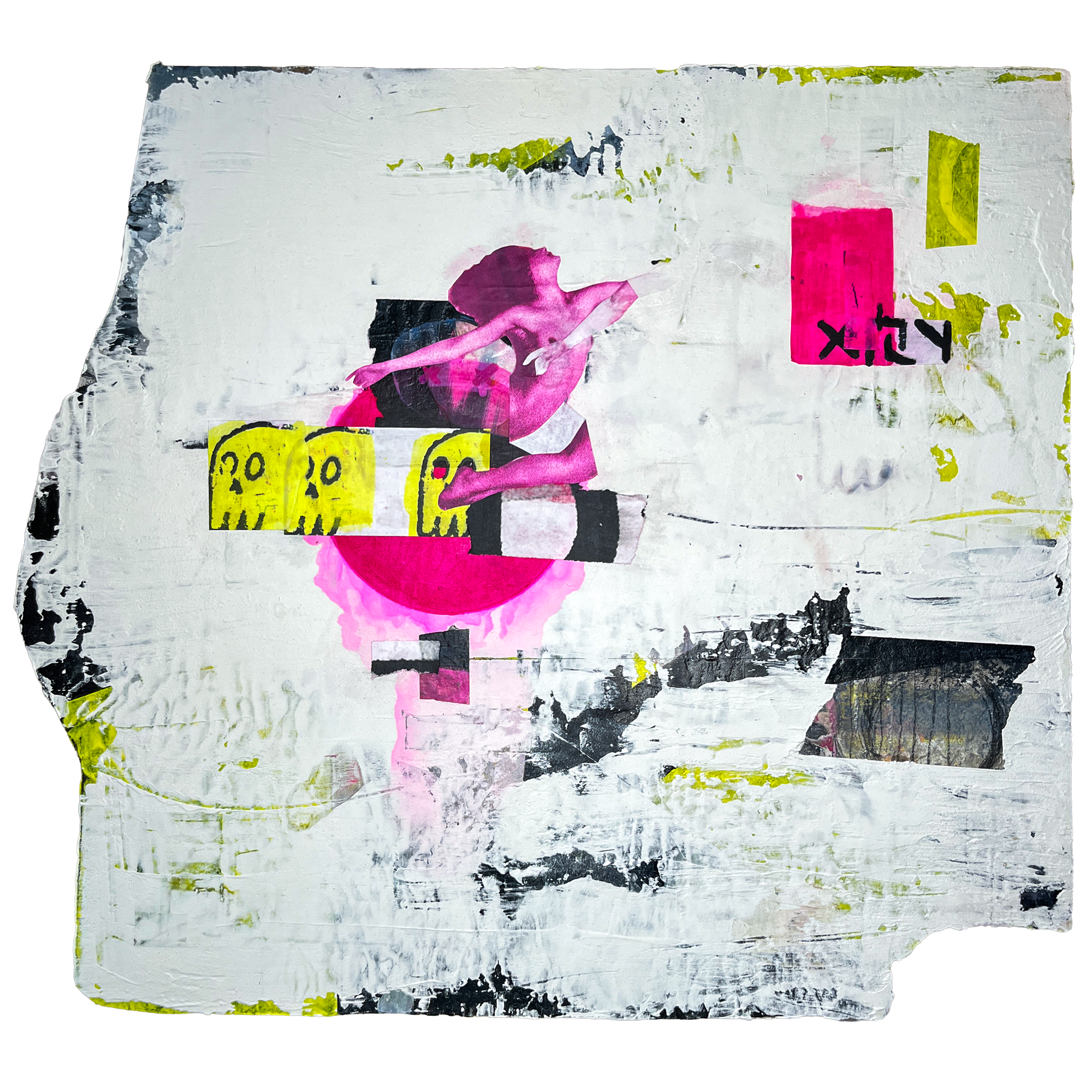
Chris Padilla said this piece felt like the most refined version and most profound of everything else I'd submitted, like it condensed all the other work into one. He said he'd had no context for how I worked, and that knowing it explained a lot. He asked whether I'd ever tried setting self-imposed limitations, painting for only 30 minutes, committing to a mark and not going back. He also said the piece reminded him of old layered billboards starting to peel, and that he almost wanted to see it 40 feet across.
I heard you need to change how you make work.
Danielle Deery asked about the physical shape, whether it was intentional. She said the skulls carry loaded meaning and encouraged me to think more carefully about imagery, color choices, symbols, and how they reflect me. She said the balance was working, that the pop of pink and yellow was powerful, and told me to keep going.
I heard it's pretty, and it means nothing.
Some of that is a lie. In the moment, I felt amazing, but I still want to do my best to find the sharp objects to cut myself with. I'm still sitting with it all. The cohesion question is the one that stays with me. I think my visual language is consistent: the palette, the found materials, the confessional text. But maybe consistency isn't the same as cohesion. Maybe I know what the work feels like without fully knowing what it's saying.
One juror mentioned sellability. I'm not going to pretend I took that cleanly. Part of me wanted to scream I'm not for sale. But I know where that reaction comes from. It comes from the fear that nobody wants to buy it. Nobody wants me. The defiance and the need are the same thing. They always are.
Love me. Fuck you.
I couldn't look up when I said it. But I said it.